
 Elizabeth Becz Producer for the Podrocket Podcast
 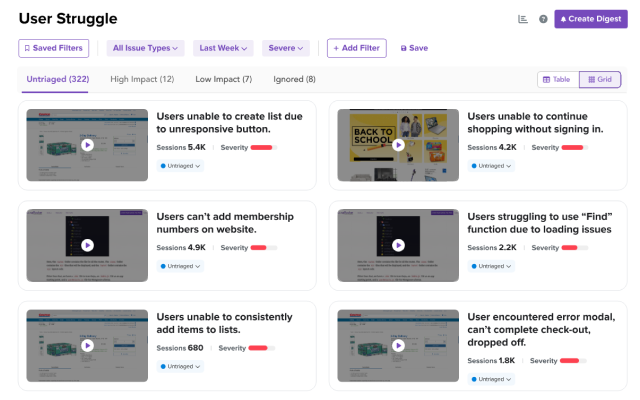 Introducing Galileo AI LogRocket’s Galileo AI watches every session, surfacing impactful user struggle and key behavior patterns. LEARN MORE
See how LogRocket's Galileo AI surfaces the most severe issues for you
No signup required
Check it outRich Harris (creator of Svelte) joined PodRocket this week to unpack his Performance Now talk, Fine Grained Everything, and why the next wave of frontend performance won’t be won with micro-optimizations, but with better primitives.
A few themes stood out:
- Most devs pick frameworks for productivity; toolmakers have to sweat the performance. Rich argues that server/client architectures can quietly create extra server work and extra bytes over fragile mobile networks, even when apps “feel fine” during development.
- RSCs are a brilliant idea with an unavoidable tax. The core problem: the server doesn’t know what the long-lived client already knows, so React’s model leans on re-rendering and diffing to generate payloads. This can mean sending (and recomputing) more than necessary.
- Svelte’s bet: ask only for what changed. Instead of shipping a whole “updated tree” payload, SvelteKit’s remote functions lean into an RPC-like model where the client requests the specific data it needs. This reduces network churn and avoids needless server-side recomputation.
- Developer experience is the real battleground. Rich frames “fine-grained everything” as eliminating the mental overhead of server vs. client component boundaries, while the framework coordinates async work (parallelizing, avoiding waterfalls, syncing updates) so devs don’t have to think in
Suspense/Transitionmachinery. - Defaults and discoverability matter more in an agent-driven world. As more people build with AI agents, frameworks need clearer “happy paths,” not just flexible ecosystems. Teams shouldn’t have to roll the dice on architecture decisions they’ll later have to maintain.
Check out the full episode on YouTube, Apple Music, or Spotify.
🚀 Sign up for The Replay newsletter
The Replay is a weekly newsletter for dev and engineering leaders.
Delivered once a week, it's your curated guide to the most important conversations around frontend dev, emerging AI tools, and the state of modern software.
Get set up with LogRocket's modern React error tracking in minutes:
- Visit https://logrocket.com/signup/ to get an app ID
-
Install LogRocket via npm or script tag.
LogRocket.init()must be called client-side, not server-side- npm
- Script tag
$ npm i --save logrocket // Code: import LogRocket from 'logrocket'; LogRocket.init('app/id');// Add to your HTML: <script src="https://cdn.lr-ingest.com/LogRocket.min.js"></script> <script>window.LogRocket && window.LogRocket.init('app/id');</script> - (Optional) Install plugins for deeper integrations with your stack:
- Redux middleware
- NgRx middleware
- Vuex plugin
- #podrocket
- #react



Stop guessing about your digital experience with LogRocket
Get started for freeRecent posts:

AI dev tool power rankings & comparison [Feb. 2026]
Compare the top AI development tools and models of February 2026. View updated rankings, feature breakdowns, and find the best fit for you.
 Chizaram Ken Feb 13, 2026 ⋅ 10 min read
How to solve package validation pain with Publint
Broken npm packages often fail due to small packaging mistakes. This guide shows how to use Publint to validate exports, entry points, and module formats before publishing.
 Rahul Chhodde Feb 12, 2026 ⋅ 5 min read
The Replay (2/11/26): React performance wins, fine-grained frameworks, and more
Discover what’s new in The Replay, LogRocket’s newsletter for dev and engineering leaders, in the February 11th issue.
 Matt MacCormack Feb 11, 2026 ⋅ 34 sec read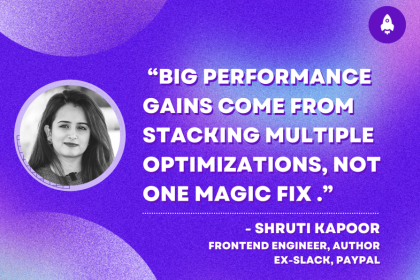
A complete guide to React performance optimization
Cut React LCP from 28s to ~1s with a four-phase framework covering bundle analysis, React optimizations, SSR, and asset/image tuning.
 Shruti Kapoor Feb 11, 2026 ⋅ 9 min read View all posts
 Leave a ReplyCancel reply
Would you be interested in joining LogRocket's developer community?
Yea No ThanksJoin LogRocket’s Content Advisory Board. You’ll help inform the type of content we create and get access to exclusive meetups, social accreditation, and swag.













Comments
0 comment