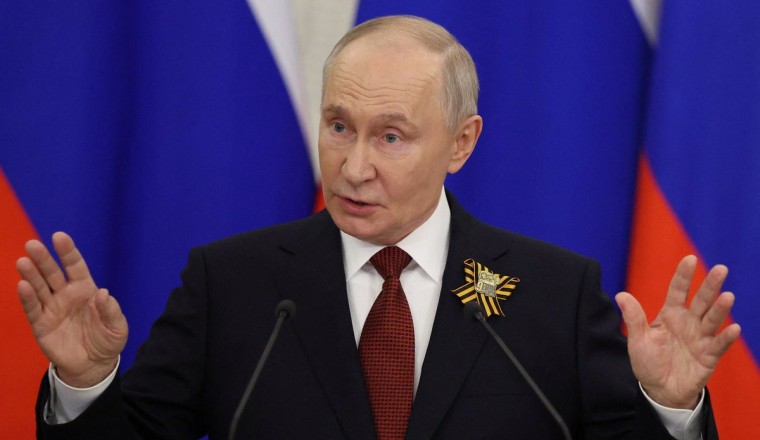
Russia’s leader is showing increasing signs of weakness while Ukraine is growing in confidence as the war turns Kyiv’s way, writes world affairs editor Sam Kiley
Tuesday 12 May 2026 11:10 BST- Bookmark
- CommentsGo to comments
Bookmark popover
Removed from bookmarks
Close popoverVolodymyr Zelensky says Putin has ‘no intention’ of ending warYour support helps us to tell the story
Read moreSupport NowFrom reproductive rights to climate change to Big Tech, The Independent is on the ground when the story is developing. Whether it's investigating the financials of Elon Musk's pro-Trump PAC or producing our latest documentary, 'The A Word', which shines a light on the American women fighting for reproductive rights, we know how important it is to parse out the facts from the messaging.
At such a critical moment in US history, we need reporters on the ground. Your donation allows us to keep sending journalists to speak to both sides of the story.
The Independent is trusted by Americans across the entire political spectrum. And unlike many other quality news outlets, we choose not to lock Americans out of our reporting and analysis with paywalls. We believe quality journalism should be available to everyone, paid for by those who can afford it.
Your support makes all the difference.Read morePausing, turning and pointing, like hounds catching a new scent, Europe's leaders are picking up a blood trail from the Kremlin. Vladimir Putin’s forces were once the hunters – now they are bleeding and Ukraine has the whiff victory in its nose.
In the latest sign that Ukraine’s systematic new policy of trying to kill at least 50,000 Russians a month is working, Putin has told his people that the end of the war he started is near.
And, in an act that was both desperate and doomed, he suggested that Gerhard Schröder, the former German chancellor could act as Europe’s envoy in talks.
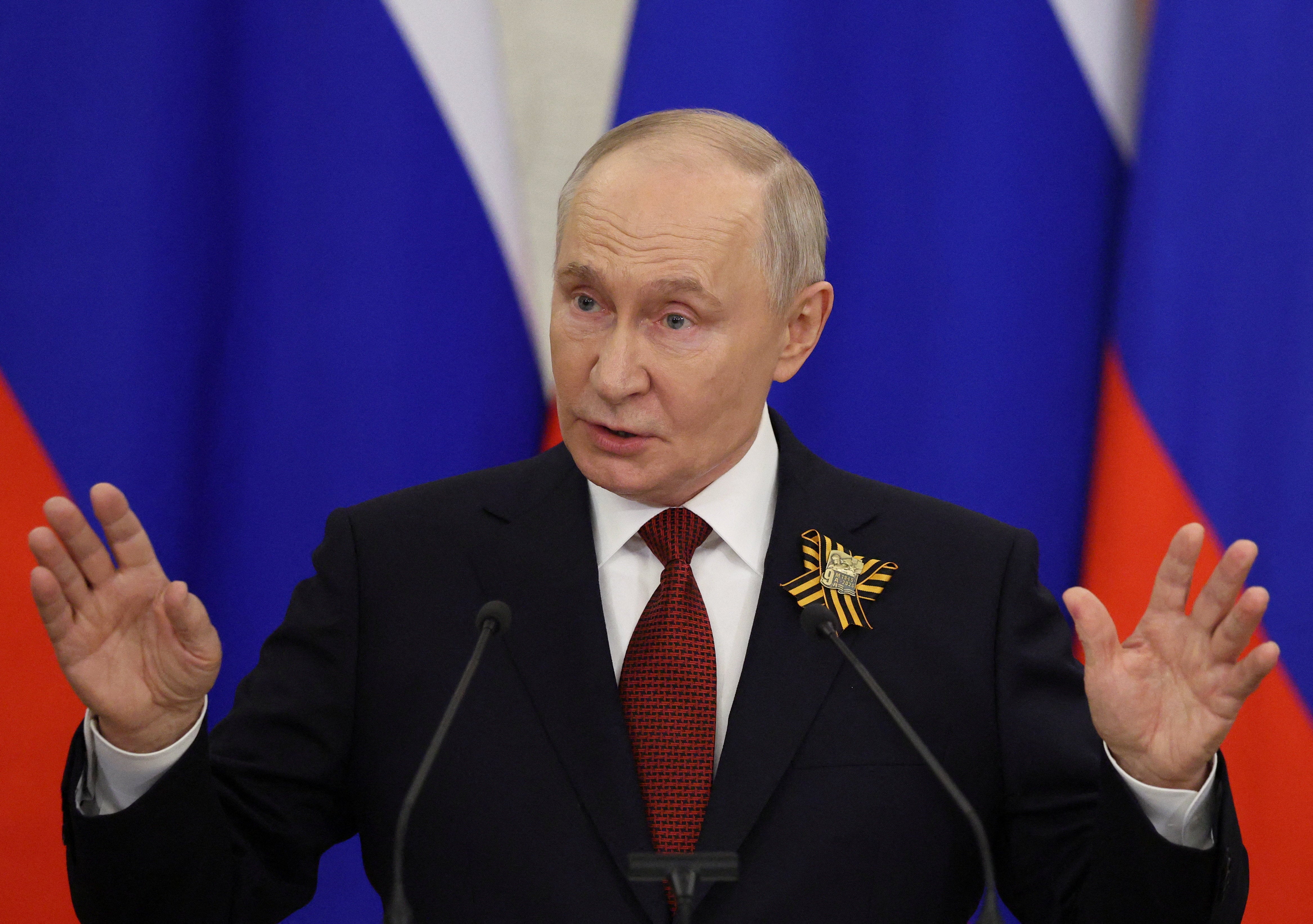 open image in galleryVladimir Putin has tried to claim that the war in Ukraine is coming to an end (Reuters)
A longstanding ally and friend of Russia’s president, the former German chancellor has also had deep ties to Russian companies, like the oil giant Gazprom.
The idea of him being a European envoy was immediately dismissed. The reaction is best summed up by Kaja Kallas, the EU foreign policy chief.
“It’s clear why Putin wants him to be the person – so that actually... he would be sitting on both sides of the table. If we give the right to Russia to appoint a negotiator on our behalf... that would not be very wise.”
In fact, there is every sign that this was a desperate act from the Russian leader. He has enjoyed the backing of the Trump administration, which has adopted Russia’s side in previous talks and cut all military aid to Kyiv, for over a year. But his forces have stalled and have lost ground in his campaign to take Ukraine.
On the front lines, there has been a steady growth in Ukrainian resolve during the winter. It has moved into outright confidence among many soldiers who have enjoyed a turn in their fortunes due to their dominance in drone warfare and successful long-range attacks deep into Russia.
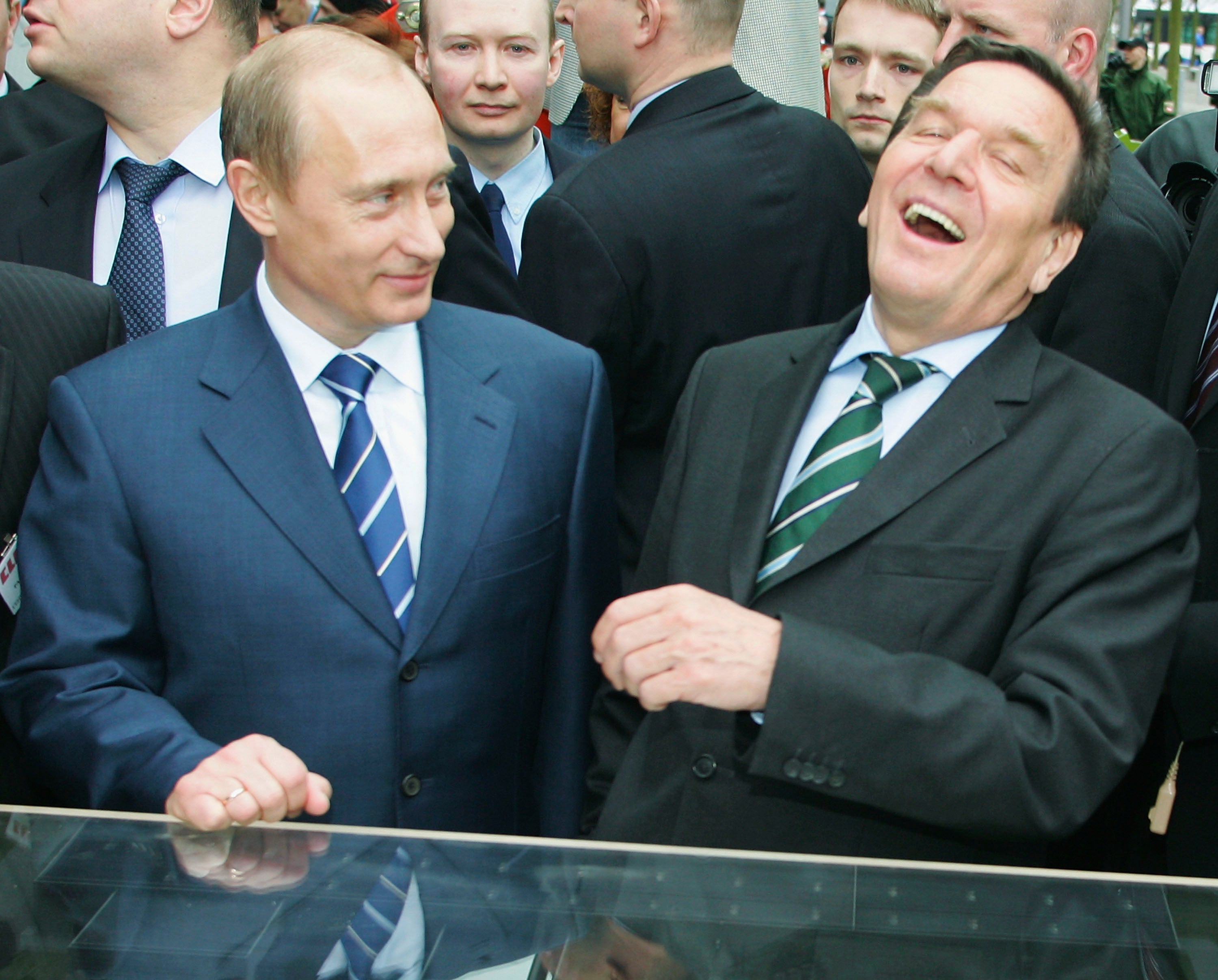 open image in galleryRussian leader Vladimir Putin and the then German chancellor Gerhard Schröder meet at the Hanover Fair in 2005 (Getty)
Ukraine controls the Black Sea where it defeated the Russian navy more than two years ago.
Now Putin’s own parades are muted affairs. His last, the 9 May Victory Parade to mark Russia’s triumph in the Second World War, went ahead only after he had agreed a ceasefire with Kyiv. He was rightly fearful that Ukraine’s home-made missiles and drones were capable of raining down on his parade.
Ukraine’s president Volodymyr Zelensky mocked his enemy by issuing a decree, including the Red Square coordinates, ordering his forces to observe a ceasefire in a parody of a Kremlin-style order from the top.
“I believe that things have started to change also after the harsh winter. We have survived one of most difficult winters in our history, despite Russian desperate attempts to destroy our critical infrastructure,” said Oleksandr Merezhko, chair of the foreign affairs committee in the Ukrainian parliament.
“On the front, Putin has failed and strategically he is losing. Ukraine has more deep strikes into the Russian territory which is rather humiliating for Putin and Russia.”
Ukraine has been hitting refineries and air fields more than 1,000km inside Russia, taken on targets around Moscow and conducted a series of assassinations of generals in Putin’s army inside the capital.
Since the beginning of this year, the level of medium-range attacks by Ukraine against Russian logistics in occupied territory has surged by 400 per cent.
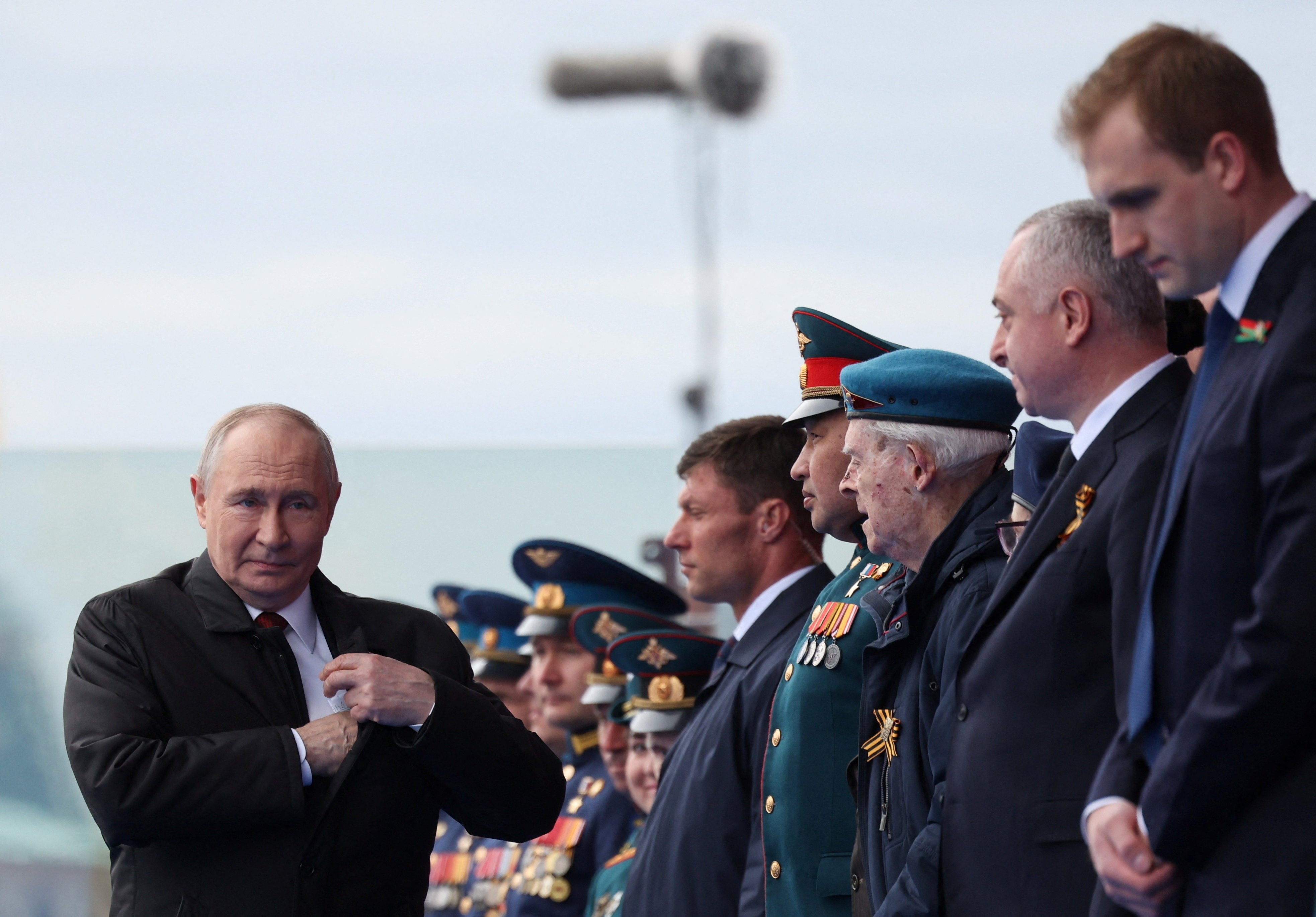 open image in galleryPutin attends a scaled down military parade on Victory Day, marking the 81st anniversary of the victory over Nazi Germany in the Second World War (Reuters)
Ukraine hit 65 logistics and ammunition depots, 33 drone control points and workshops, as well as 17 troop command posts in both occupied Ukraine and in Russian border regions, Kyiv’s Ministry of Defence said.
The results have been incremental gains like the reported recapture of Kupyansk, a strategic town on the Donetsk River, where Russian forces were cut off and surrounded.
They have also been crucial in grinding down Russian air defences to allow Ukraine’s long-range Flamingo missile to hit military-industrial sites, including defence manufacturing facilities in the city of Cheboksary, more than 1,000 km deep inside Russia.
Ukraine’s aim is to collapse the Russian army without having to assault it head on. The families of Russian soldiers are paid $165,000 (£122,000) compensation if the soldiers are killed. If Ukraine manages to kill 50,000 a month then Moscow’s bill would be $8.25bn a month.
By wiping out its logistics and drone bases, the aim is to undermine Moscow’s command and control systems so badly that Russian troops abandon the fight altogether.
Before Russia’s president claimed that he saw an end to the war soon, the EU’s Kallas had made it clear Europe was not interested in acceding to Moscow’s demands ahead of any talks.
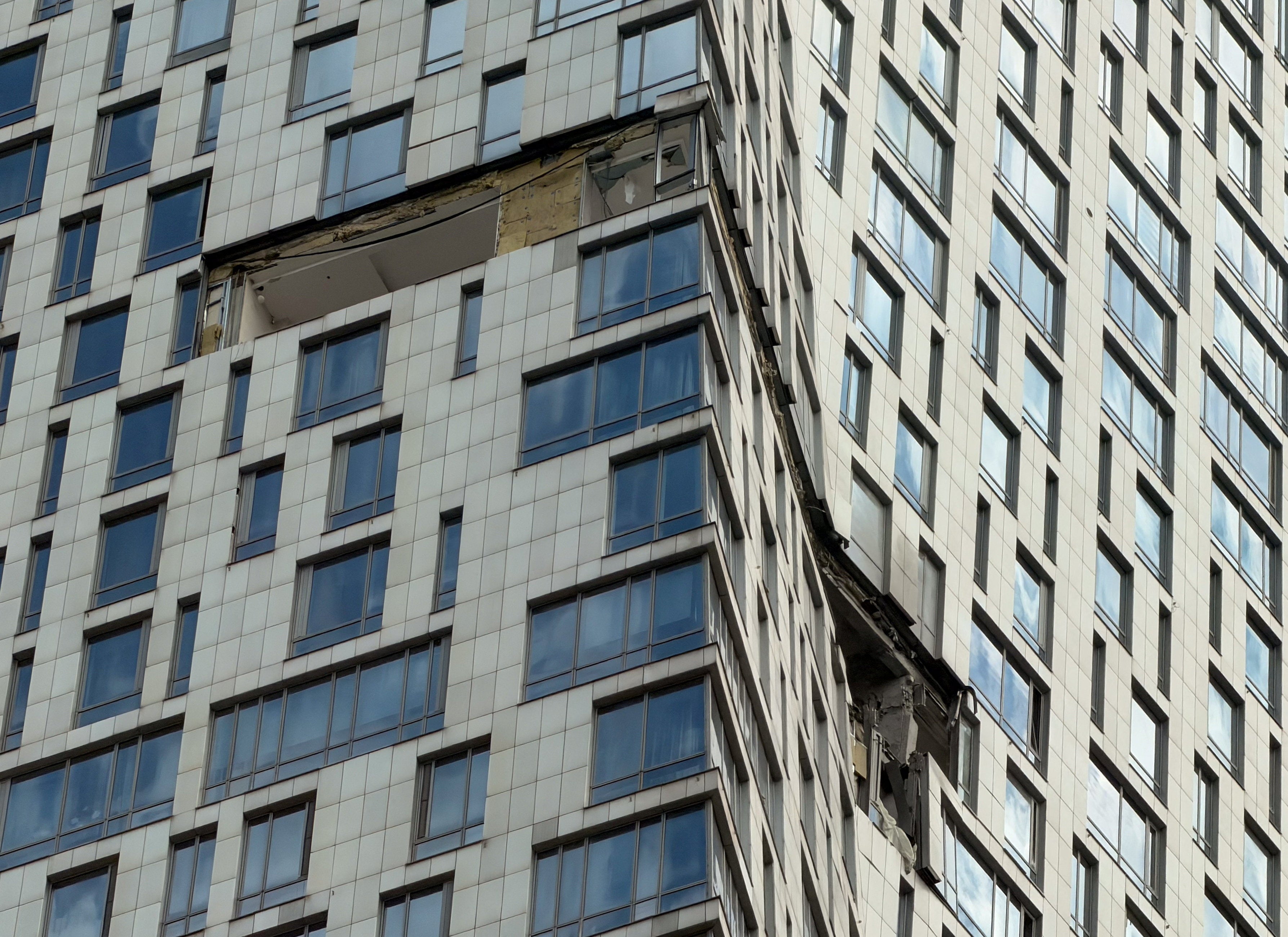 open image in galleryThe damaged facade of a high-rise building attacked by Ukrainian drones in Moscow in early May (Reuters)
“We should not humiliate ourselves by being the demandeurs, ‘Please we beg you to talk to us’, but we should put them in a position where they actually go from pretending to negotiate to actually negotiate,” she said.
Europe is taking a more robust line because it can due to Ukraine gaining military momentum. And a powerful voice in international affairs.
Gregoire Roos, director of Europe and Russia and Eurasia Programmes at Chatham House, said: “Ukraine has stopped presenting itself only as a victim and increasingly presents itself as a security provider. Zelensky is now selling Ukraine’s drone expertise abroad: nearly 20 countries are interested in drone deals with Ukraine, with several agreements already signed, including in the Gulf.
“Second, Ukraine has become by far the most innovative and adaptive defence industrial lab in Europe.”
More about
UkraineVladimir PutinVolodymyr ZelenskyKaja KallasRussiaEUJoin our commenting forum
Join thought-provoking conversations, follow other Independent readers and see their replies





Comments
0 comment