 A montage of some of the victims who have been identifed by BBC News Persian [BBC]
BBC News Persian has verified the identities of more than 200 of the thousands of people killed during Iran's brutal crackdown on the recent widespread protests.
The project has scoured social media, verified online footage and used eyewitness accounts to build up a chronicle of how and when the protesters were killed, as well as some details about their lives.
Many of these accounts were provided to the BBC by sources close to the victims and were cross-checked against data from human rights organisations.
AdvertisementAdvertisementSince the unrest began in late December, the US-based Human Rights Activists News Agency (HRANA) has confirmed the deaths of 6,872 protesters, including more than 150 children.
'Side by side'
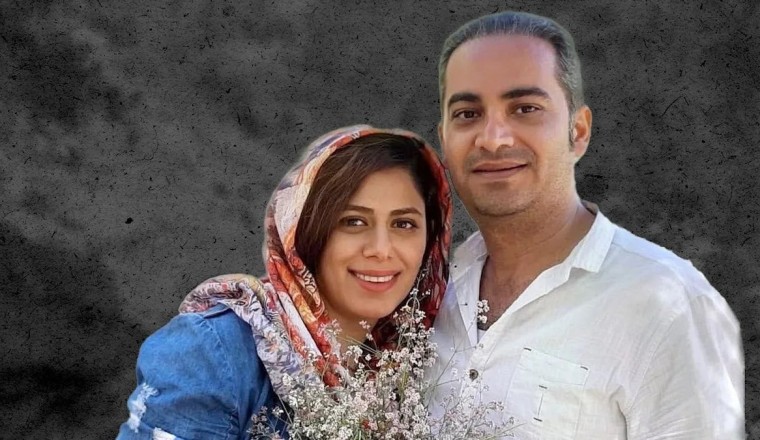
 Mansoureh Heydari and her husband, Behrouz Mansouri were shot dead by security forces on 8 January, a family friend told the BBC [BBC]
Iranian authorities acknowledge that at least 3,000 people were killed, but claim some were members of the security forces.
Pictures of and information about victims identified by BBC News Persian can be seen in this page on the BBC News Persian site (text in Persian).
Among those killed were Mansoureh Heydari and her husband, Behrouz Mansouri. A family friend told BBC News Persian that the couple had joined the protests in Bushehr, in south-west Iran, when both were shot dead by security forces on 8 January.
AdvertisementAdvertisementThe security forces had opened fire on protesters gathered outside a mosque, they said. Behrouz was struck in the head and fatally wounded. Mansoureh, who had initially been running away, returned to her husband but was later shot as well.
The couple died side by side in the street, leaving behind two children aged eight and 10. Their bodies were returned by security forces four days later and they were buried next to each other.
A close relative said the family were "proud" that the couple had "died for their homeland" but added that they now live in fear under intense security pressure.
'Dad, I'm burning'
Many of the faces featured in the project are young men and women, mostly in their late teens to early 30s.
AdvertisementAdvertisementOne 17-year-old art student, Ghazal Damarcheli, was shot outside her family home in the city of Karaj, west of Tehran, on 9 January.
 Ghazal Damarcheli's family say the security forces did not allow them to bury her nearby [BBC]
A source close to the family told BBC News Persian that even after her death, the family faced pressure, as security forces refused to allow them to bury her nearby. Her remains were instead interred in a remote cemetery, far from the family home.
That same night, 28-year-old biotechnology student Negin Ghadimi was also killed.
 Negin Ghadimi died in her father's arms, a family friend told the BBC [BBC]
Despite her father's pleas for her to stay at home, she joined protesters on the streets of Tonekabon, about 200km (125 miles) north of Tehran.
AdvertisementAdvertisementSecurity forces opened fire on the crowd, and she was hit in the side, a source close to the family said. She fell into her father's arms and told him as she lay dying: "Dad, I'm burning."
Ongoing project
 Thousands of people gathered on the streets of Tehran during demonstrations held in early January [Getty Images]
The findings for this project were produced through multiple steps and interviews with sources inside Iran, many of whose names cannot be disclosed for safety reasons.
More in World

Top 10: Best US Navy planes of the Second World War
 Autocar
16 astonishing images from the 2026 Wildlife Photographer of the Year awards
 Popular Science
Russian officials are warning Putin that a financial crisis could arrive this summer, report says, while his war on Ukraine becomes too big to fail
 Fortune295
Iran executes at least 13 prisoners on Saturday morning as regime increases use of death penalty
 Jerusalem Post139
After examining social media accounts and online activity to establish each person's identity and involvement in the protests, the BBC team cross-checked the circumstances around their deaths against open-source data from inside Iran.
Analysing footage of funerals and images of memorials provided key details, such as timing, location and circumstances of death.
AdvertisementAdvertisementIndividuals were also identified in footage from morgues, including the Kahrizak Forensic Medical Centre, to where many bodies from Tehran and surrounding areas were transferred.
 Footage of anti-government protests became less after the government cut off internet, mobile and landline access in early January [Getty Images]
The work became especially difficult at the height of the protests on 8 January, when Iran's government cut off internet, mobile phone and landline access for nearly three weeks.
But by piecing together information from inside the country via Starlink, the satellite network owned by Elon Musk, and relying on eyewitness accounts from Iranians who travelled to the borders to pick up neighbouring signals, BBC News Persian was able to start verifying the reports of protesters' deaths.
The BBC Visual Journalism team has created an interactive "face wall" for the BBC News Persian website, where readers can explore the profiles of victims identified through the research by clicking on each photograph.
The project is ongoing, and the team aims to add further names and stories as verification continues.
'We all know someone who was killed' - Iran protesters tell BBC of brutal crackdown






Comments
0 comment