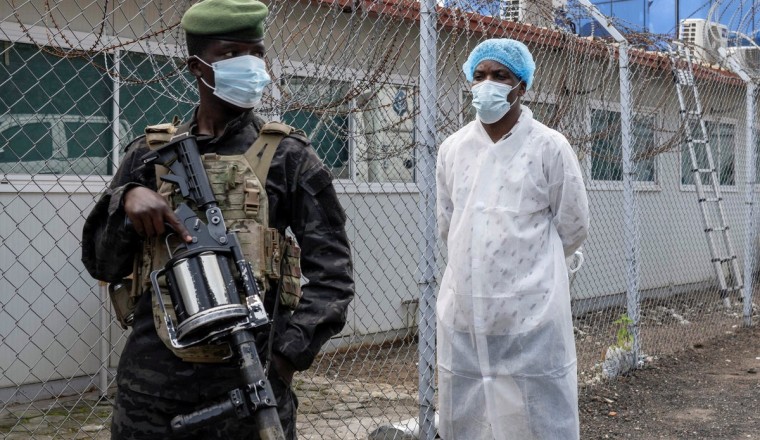
Rachel Hagan speaks to health workers and aid groups about how difficult it is to stop an outbreak that took weeks to confirm in a country where hospitals and health centres already under strain have been hit by aid cuts from countries like the US and UK
Wednesday 20 May 2026 11:47 BST- Bookmark
- CommentsGo to comments
Bookmark popover
Removed from bookmarks
Close popoverWHO boss warns Ebola cases will rise as deaths reach 139Your support helps us to tell the story
Read moreSupport NowFrom reproductive rights to climate change to Big Tech, The Independent is on the ground when the story is developing. Whether it's investigating the financials of Elon Musk's pro-Trump PAC or producing our latest documentary, 'The A Word', which shines a light on the American women fighting for reproductive rights, we know how important it is to parse out the facts from the messaging.
At such a critical moment in US history, we need reporters on the ground. Your donation allows us to keep sending journalists to speak to both sides of the story.
The Independent is trusted by Americans across the entire political spectrum. And unlike many other quality news outlets, we choose not to lock Americans out of our reporting and analysis with paywalls. We believe quality journalism should be available to everyone, paid for by those who can afford it.
Your support makes all the difference.Read moreHealth workers in eastern Democratic Republic of Congo (DRC) are scrambling to contain a fast-moving Ebola outbreak that aid groups warn is spreading through communities already exhausted by war and facing collapsing healthcare systems as global aid budgets are cut.
The outbreak’s epicentre lies in informal mining communities in Ituri province - areas with high population movement, poor sanitation and limited formal healthcare access.
“There is not enough equipment, not enough chlorine, gloves or protective gear in the province. And contact tracing is going to be extraordinarily difficult”, Greg Ramm, Save the Children’s country director in DRC, tells The Independent after returning from Bunia, near the outbreak epicentre. He has seen this before, he led Save the Children’s response in Liberia during the 2014 West Africa Ebola epidemic that killed more than 11,000 people. "We know what to do when we catch Ebola quickly”, Ramm says, “At this point, it’s very much not under control.”
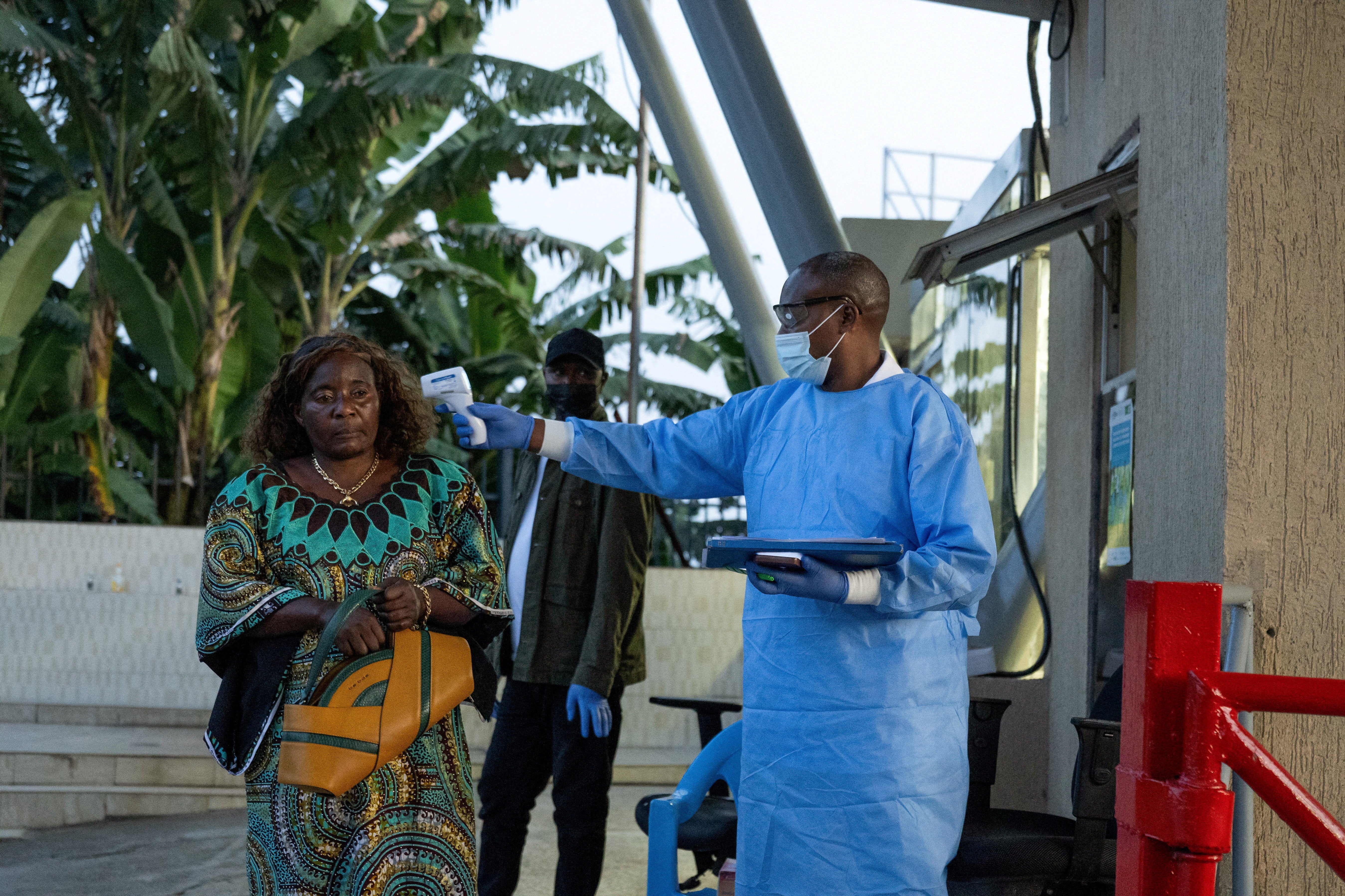 open image in galleryA Congolese health worker checks the temperature to screen a traveller at the Grande Barrier border following confirmation of an Ebola outbreak (Reuters)
In Goma, eastern DRC’s biggest city, Chantal, who runs the Jericho Road clinic, tells The Independent that staff first learned there were confirmed Ebola cases through a WhatsApp message, not a formal alert.
“It was last Saturday that we received information via WhatsApp that there were positive cases in Goma. We called the Department of Public Health to verify it", she says.
As of Wednesday, more than 600 suspected cases and at least 139 suspected deaths had been reported across the DRC according to Congolese authorities and the World Health Organisation (WHO). Uganda has confirmed two imported cases, including one death, while an American national has been evacuated to Germany for treatment, while another is set to be sent to a hospital in Prague from Uganda.
The outbreak is already the most serious Ebola crisis in eastern Congo since 2018, when more than 2,000 people died. The Bundibugyo strain of Ebola circulating is slightly less deadly than the better-known Zaire strain, but there is no licensed vaccine or rapid diagnostic test for it. When health workers in Ituri first suspected something was wrong, the only test kits available locally were designed for Zaire strain Ebola and repeatedly came back negative. Samples eventually had to be flown more than 1,200 miles to Kinshasa for confirmation.
“The tests came back negative, so they started looking for other explanations”, Ramm says “But health workers were getting sick. Something didn’t make sense.” By the time Bundibugyo was confirmed, the virus had already spread across multiple health zones. In Mongwalu, according to local health officials, some deaths were initially attributed to witchcraft rather than disease.
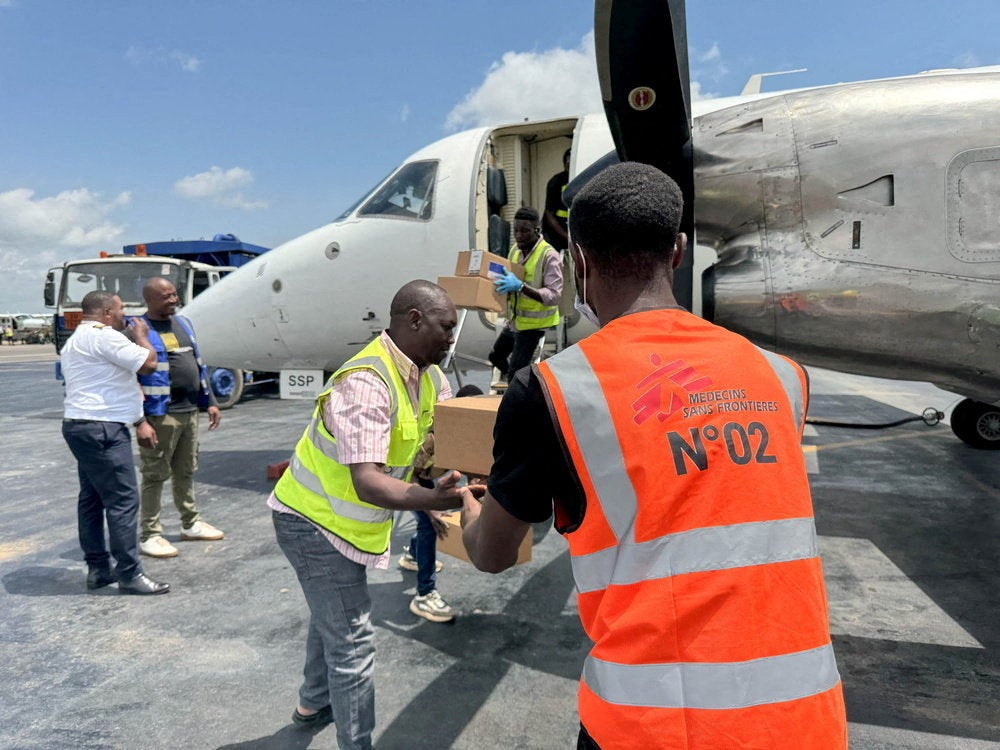 open image in galleryA Medecins Sans Frontieres (MSF) cargo flight is unloaded at Bunia airport with emergency response supplies (Reuters)
Bundibugyo has only caused two previous recorded outbreaks, both in Uganda in 2007 and 2012, killing around 30 per cent of those infected. It often presents with fewer obvious symptoms than other Ebola strains, slowing diagnosis as many patients initially assume they have malaria.
“It will not be easy to contain the epidemic in the city because the population does not readily adhere to preventative measures”, Chantal says of Goma. “The population is already traumatised by a multitude of problems. There are disasters all the time. War, volcanic eruptions, epidemics.” Families, she adds, are hiding sick relatives at home out of fear and distrust. Pharmacies are already running short of soap, disinfectant and masks.
The WHO's Dr Anne Ancia told BBC Newsday: "The more we are investigating this outbreak, the more we realise that it has already disseminated at least a little bit across border and also in other provinces."
Eastern Congo’s conflicts are making containment even harder. Ituri and North Kivu are home to dozens of armed groups whose activities have left large areas inaccessible to health workers and humanitarian agencies.
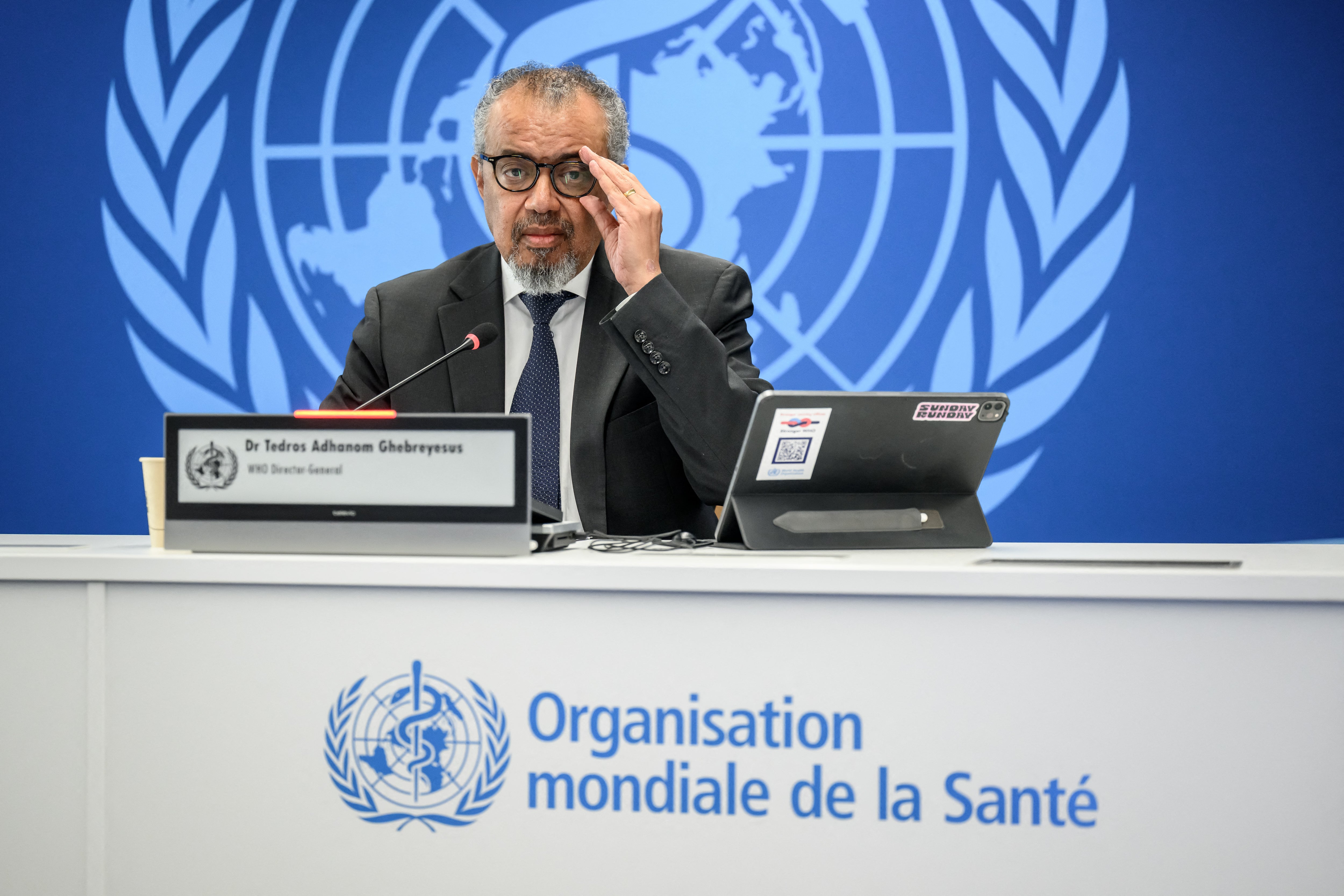 open image in galleryWorld Health Organization (WHO) Director-General Tedros Adhanom Ghebreyesus (AFP/Getty)
“If it spreads into areas that are not accessible for security reasons, then you have a very different problem.” Ramm says. The roads that do exist are among the worst in the region. Getting supplies into affected communities can take days. Goma itself sits near the Rwanda border and has been partly under M23 rebel control for months. The airport remains shut, banks have closed and border restrictions have now tightened even more.
Aid organisations warn the outbreak is colliding with one of the world’s most underfunded humanitarian crises. “The outbreak is hitting a country already stretched to breaking point”, says Dr Manenji Mangudu, Oxfam’s country director in DRC. “Ongoing conflict and years of aid cuts have deepened a humanitarian crisis of staggering scale.”
The UN’s humanitarian appeal for DRC in 2026 requested $1.4 billion (£1bn) but has received only around a third of that amount. WHO officials say funding for water and sanitation programmes in DRC has fallen by 73 per cent over the past year. Several aid groups warned that cuts to international assistance, including significant cuts by the US and UK across the last year, have weakened disease surveillance systems meant to detect outbreaks before they spread.
Recommended UK pushes ‘bold new approach’ to aid as Cooper warns of global food crisis over Iran war
Trump ‘concerned’ about Ebola outbreak after American tests positive for deadly virus
 US bans travellers from three African countries amid deadly Ebola outbreak
Heather Reoch Kerr, country director for the International Rescue Committee humanitarian group in DRC, says: “Funding cuts have left the region dangerously exposed. The sharp rise in reported cases over the last few days reflects the reality that surveillance systems are now catching up with transmission that has likely been occurring for some time. Preparedness in high-risk areas is critical to disrupting transmission before the outbreak spreads further. Years of underinvestment and recent funding cuts have left many health facilities without adequate protective equipment, surveillance capacity, or frontline support needed to respond quickly and safely.”
For Ramm however the greatest fear is not only Ebola itself, but the collapse of already fragile healthcare systems around it. He says: “If health centres shut down, or people stop going because they think that’s where you go to die, then a child with malaria won’t get treatment. A child who’s malnourished won’t get treatment. You will wind up having far more children die of malaria than would ever die of Ebola.”
Back in Goma, Chantal is still seeing patients every day. “What frightens us”, she says, “is the increase in cases and a lockdown.”
This article has been produced as part of The Independent’s Rethinking Global Aid project
More about
DRCEbolaaid budgetUgandaRethinking Global AidJoin our commenting forum
Join thought-provoking conversations, follow other Independent readers and see their replies






Comments
0 comment