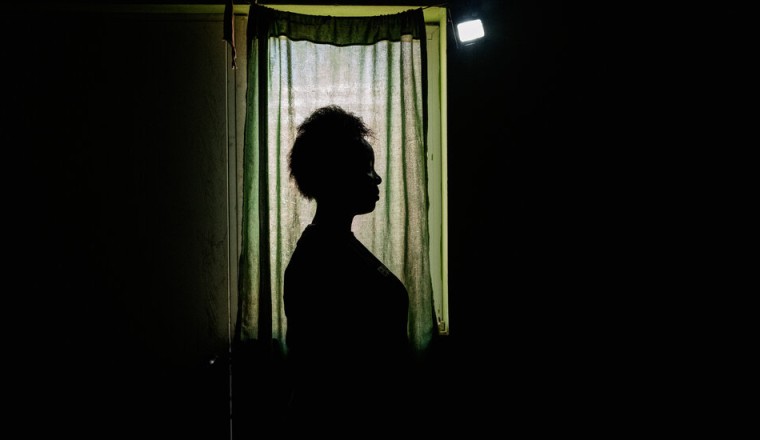
 Fearing Deportation, Mothers Give Birth in Shadows
Haitian women are having babies in squalid, unsupervised settings after the Dominican Republic started sending immigration agents to detain migrants at hospitals.
Katty Joseph, 20, in the room where she gave birth in the Dominican Republic. She said she feared that seeking care in a public hospital without legal documents could lead to deportation.Fearing Deportation, Mothers Give Birth in ShadowsHaitian women are having babies in squalid, unsupervised settings after the Dominican Republic started sending immigration agents to detain migrants at hospitals.
Katty Joseph, 20, in the room where she gave birth in the Dominican Republic. She said she feared that seeking care in a public hospital without legal documents could lead to deportation.Credit...
Supported by
SKIP ADVERTISEMENTListen · 11:18 min- Share full article
Photographs by Ana María Arévalo Gosen
Written by Hogla Enecia Pérez and Luis Ferré-Sadurní
Reporting from the Dominican Republic
- May 26, 2026
Katty Joseph, a Haitian woman living in the Dominican Republic, was afraid to go to a hospital to have her baby.
She did not want to get deported.
Dominican immigration officials stationed at public hospitals were detaining undocumented migrants who were then deported, including mothers and their newborns. The dragnet, underway for over a year, has overwhelmingly ensnared Haitians fleeing a catastrophic humanitarian crisis in neighboring Haiti.
Ms. Joseph, 20, arrived in the Dominican Republic a year ago and was living in the backroom of a car repair shop after the owner took her in. That is where, in late October, she said she gave birth.
Propped on a blanket on the grease-stained floor, she said she pushed through the stifling Caribbean heat with the help of a friend. Ms. Joseph cut the umbilical cord herself with a razor, she said, but the baby didn’t cry.
Less than 24 hours later, he was dead, she said.
“It was a very difficult moment,” Ms. Joseph said in Creole, searching for words to describe her loss.
Image Ms. Joseph, right, with the friend who helped her during childbirth inside the room where she said she gave birth.
Thank you for your patience while we verify access. If you are in Reader mode please exit and log into your Times account, or subscribe for all of The Times.
Thank you for your patience while we verify access.
Already a subscriber? Log in.
Want all of The Times? Subscribe.
Related Content
Advertisement













Comments
0 comment